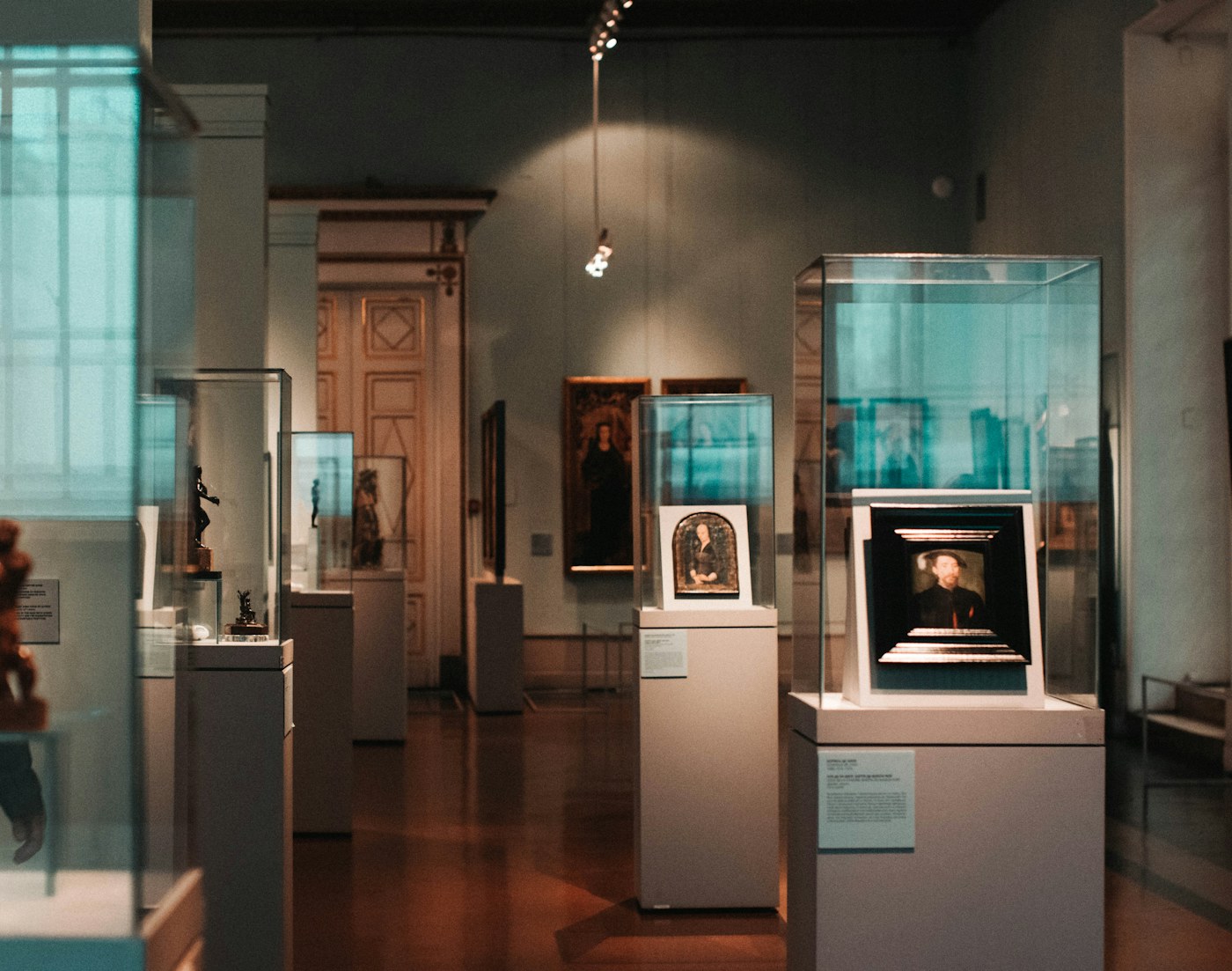
A label names an object, but the room gives it a relationship with scale, light, distance and the people around it. Read the display as part of the interpretation.
Grand Venue
Three layers of display
Look at the object, then at the case or plinth, then at the space that lets other visitors approach. Meaning is built across all three layers.
Object
Material, surface, damage and gesture carry the first evidence.
Frame
Case height, lighting and distance shape what becomes visible.
Public
The room decides how attention is shared, interrupted or protected.
Grand Venue
A material-first route
Stone, wood, faience, metal, pigment and writing ask for different kinds of looking. Moving by material can make a large collection feel more connected without flattening historical difference.
- Compare texture before comparing dates.
- Notice what changes under different light.
- Read restoration as part of the object’s public history.
Grand Venue
Labels are invitations
A good label opens a question as well as giving a fact. Read it once for identification, then again for what it asks you to investigate in the room.
Grand Venue
Keep one quiet record
Write one sentence after a gallery: what did the room make easy to notice, and what did it make easy to miss?
Visible
What detail became clear from a distance?
Hidden
What needed a closer or slower look?
Shared
Where did other visitors change your reading?